
The seat you choose for Hamilton matters more than it does for a lot of shows. The staging uses a revolving stage, full-ensemble choreography, and lighting that covers the whole house. Where you sit changes how much of that you catch.
I put this guide together to help you compare sections, understand trade-offs, and pick a seat that fits your budget and expectations — before you pay. Use the section links above to jump straight to what you need.

The best seats for Hamilton — quick answer
If you want a direct answer before the detail: front mezzanine center is the most consistently recommended section for Hamilton. You get the full stage picture, the revolving stage works in your favor, and the price is usually more reasonable than front orchestra.
Here’s how I’d rank the sections by overall experience:
-
Front mezzanine, center (rows A–D)
Full stage view, ideal height for watching the revolving stage and ensemble choreography, strong acoustics. My first recommendation for most buyers. -
Orchestra center (rows E–M)
Close to the action, strong sight lines if you’re in the center. Rows too close to the front (A–D orchestra) can feel steep and uncomfortable for neck craning. Mid-orchestra center is the sweet spot. -
Rear mezzanine, center
Farther back but still a clean stage picture. A genuine budget option that does not punish you with a bad angle. You lose some facial detail but gain the full choreography view. -
Rear orchestra, center
Slightly lower sightline than mezzanine, but still a solid seat if center. Avoid far-side rear orchestra — the angle becomes a factor. -
Balcony, center
Distant, but not ruined. If the venue has decent sightlines, center balcony works as a budget seat. You trade facial detail for a complete overhead view of the staging. -
Side seats (orchestra or mezzanine)
These vary by venue and row. Some side-mezzanine seats are fine. Far-side, close rows are where the angle becomes a real issue. Check the seat map before buying anything listed as “side.”
Rule of thumb: center beats close. A centered seat three rows back beats a side-front seat every time for this show. Hamilton uses the full width of the stage constantly.
Hamilton orchestra seats
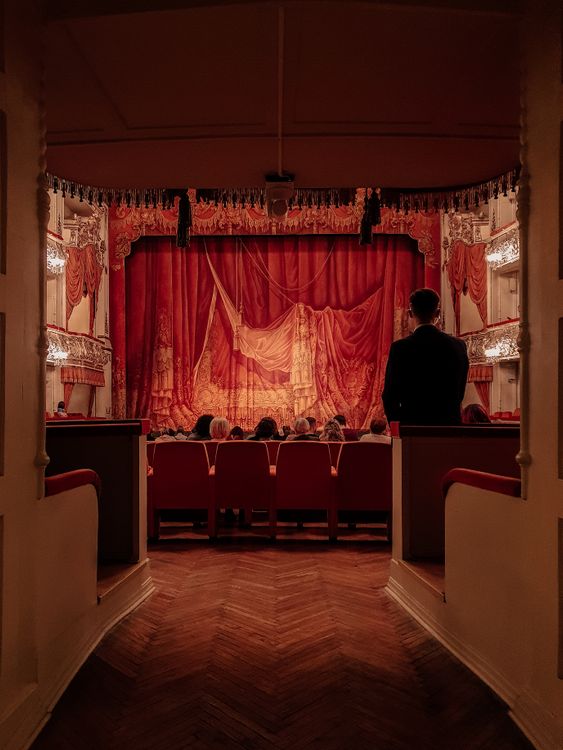
Orchestra seats are on the main floor level — the lowest section, closest to the stage. In most Broadway and touring theaters, the orchestra runs roughly 20–30 rows deep.
What works about orchestra seats for Hamilton
- You feel close to the show. The energy in the first half dozen rows is high.
- Center orchestra rows E–M give you a strong, level sight line with good proximity.
- Orchestra seats typically include the best available inventory on most ticket platforms.
What to watch for
- Very front rows (A–D orchestra): You’ll be looking up at a steep angle. The revolving stage means some action happens behind cast members’ backs from this position. I’d avoid these unless the price is very low.
- Far-side orchestra: The proscenium can cut your view of one wing of the stage. Check “partial view” or “restricted view” notes before buying.
- Rear orchestra vs. front mezzanine: Rear orchestra and front mezzanine are often priced similarly. Front mezzanine usually gives a better overall stage picture. Worth comparing both sections before deciding.
Orchestra center is excellent if you can get rows E through roughly M. Outside that range, I’d compare against mezzanine before paying orchestra prices.
Hamilton mezzanine seats
The mezzanine is the first elevated level above the orchestra. It runs front-to-back in most venues, typically 10–18 rows depending on the theater.
Why the mezzanine works especially well for Hamilton
Hamilton is a show where the full picture matters. The turntable, the ensemble staging, the choreography — you see more of it from the mezzanine than you do from the front orchestra floor. I’d rather be in row C of the front mezzanine than row B of the orchestra for this show.
- Front mezzanine, center (rows A–D): Best overall seat in most Hamilton venues. Strong view, good acoustics, full stage picture. This is where I’d start looking.
- Mid mezzanine, center: Still very solid. You move back slightly but keep the centered view. Often better value than front mezzanine if prices jump.
- Rear mezzanine, center: The furthest back in this section, but still a clean view if you’re centered. The budget-smart choice when front mezzanine prices are high.
- Side mezzanine: Varies by venue and row. First few rows of side mezzanine can have decent angles. Far-side seats in later rows can feel awkward. Always check the seat map.
For most buyers, front or mid mezzanine center is the answer. It is the section I recommend most often when someone asks where to sit for Hamilton without a specific budget constraint.
Hamilton balcony seats — are they worth it?

The balcony is the highest section in the theater — the second elevated tier above the orchestra, where it exists. Not all touring venues have a balcony; some have a single mezzanine level instead.
Can you see Hamilton from the balcony?
Yes — you can follow the show from the balcony. You lose close-up facial detail, but you can hear the full score, follow the story, and see the staging. For a show that leans heavily on ensemble choreography and broad staging, the distance does not ruin the experience the way it might for an intimate two-person drama.
Honest balcony caveats
- Front center balcony is better than rear side balcony by a noticeable margin. Always go center if you’re in the balcony.
- Some theaters have steep balcony rake angles — this can feel uncomfortable over 2 hours 45 minutes if you have knee or back concerns.
- Rear balcony rows can feel quite far. The Schuyler Sisters will survive the distance, but you will know you are at the back of the building.
- Balcony is a legitimate budget choice if the price difference versus mezzanine is meaningful to you. It is not a punishment. It is a trade-off.
My take: front center balcony is worth considering if it saves you a real amount versus mezzanine. Rear side balcony is the section I would avoid unless the ticket price justifies the seat.
Hamilton orchestra vs. mezzanine — which is better?
This is the most common seating question I see for Hamilton, and the honest answer is: it depends on which rows you’re comparing.
| Factor | Orchestra (center, rows E–M) | Front Mezzanine (center, rows A–D) |
|---|---|---|
| Stage proximity | Closer physically | Slightly further but elevated |
| Full stage view | Good, level sight line | Better — see the full revolving stage |
| Choreography visibility | Good from mid-orchestra | Excellent — you see the full picture |
| Acoustics | Strong | Strong — often slightly more balanced |
| Typical price | Higher (center orchestra is premium) | Often slightly lower than front orchestra |
| Best for | Feeling close, energy of the front section | Seeing everything — staging, choreography, full stage |
| Avoid when | Side seats, very front rows (A–D), far side | Far side mezzanine seats |
If I had to choose: front mezzanine center for Hamilton specifically. The staging rewards a slightly elevated center view. But center orchestra rows E–M is not a wrong answer — it is a great seat.
Where it gets complicated: rear orchestra vs. front mezzanine at similar prices. Front mezzanine almost always wins that comparison for this show.
Hamilton partial view and restricted view seats — what to know

Partial view and restricted view seats are real, and the label can mean very different things depending on the specific seat.
Sometimes partial view means a small corner of the stage is cut off by a column or the proscenium edge. Sometimes it means the seat has a genuinely bad angle where a meaningful portion of the action happens out of your sight line. The label is consistent; the actual impact is not.
Before buying any partial or restricted view seat
- Check the ticket listing for any additional notes beyond the label — some platforms add detail about what specifically is blocked.
- Look at the seat map and check the seat’s position relative to the stage. Far-side, close rows are the most likely to have real issues.
- Search the seat number on SeatGeek or a seat view site if one is available for that venue — some have fan-submitted photos from specific seats.
- Consider whether the price reflects the view restriction meaningfully. A partial view seat priced like a full view seat is not a deal.
- For Hamilton specifically: the revolving stage means some action is always moving. A partial view seat can miss transitions, ensemble staging to one side, or key moments staged in the wings.
Fair warning: some partial view seats are fine, especially if the restriction only affects a rarely-used part of the stage. Others are genuinely compromised. The only way to know is to check the specific seat, not just the section.
Richard Rodgers Theatre seating chart — Hamilton on Broadway

The Richard Rodgers Theatre in New York is where Hamilton ran its original Broadway production. It is a mid-size Broadway house at 1,319 seats, with three seating levels: orchestra, front mezzanine, and rear mezzanine. There is no separate balcony.
Richard Rodgers Theatre — section breakdown
| Section | Rows | Notes |
|---|---|---|
| Orchestra | A–T (approx 20 rows) | Main floor level. Rows A–D are very close — steep angle. Rows E–M center are the prime orchestra seats. Rear orchestra (N–T) center is solid value. |
| Front Mezzanine | A–F (approx) | First elevated level. Center seats rows A–D are widely considered the best overall seats for Hamilton. Elevated enough to see the full revolving stage clearly. |
| Rear Mezzanine | G onward | Further back on the elevated level. Center seats remain decent. Far-side rear mezzanine gets into angle territory — check the seat map carefully. |
Richard Rodgers Theatre quick seating notes
- The theater is relatively narrow compared to some Broadway houses, which means even side seats are not dramatically off-angle in the center sections.
- The rear mezzanine’s back rows feel noticably far. Some viewers find the last few rows steep and distant.
- Boxes exist on either side of the front mezzanine level — limited view from these, mostly used for partial view or group seating situations.
- Will call and entry is on 46th Street between 8th and 9th Avenues. I’d arrive at least 30 minutes early, more if you need to collect tickets.
Planning a Broadway trip? The Hamilton Broadway tickets hub covers ticket options, lottery information, and buying guidance specific to the New York production.
Hamilton accessible seating
Most venues hosting the Hamilton national tour offer accessible seating for wheelchair users, companions, and patrons requiring specific accommodations. The details vary by venue.
What to check with the venue directly
- Wheelchair and companion seating locations: These are usually scattered across multiple sections — orchestra level, mezzanine, and sometimes balcony — to give accessible patrons a choice of view and price point.
- Accessible performances: Some tour stops offer specific performances with ASL interpretation, open captioning, audio description, or large print programs. These are usually listed separately on the venue’s calendar.
- Seating transfer options: Some patrons who use wheelchairs can transfer to standard seats. Venues should have companion seating available next to accessible spots.
- Entry and access routes: Check elevator availability, accessible restroom locations, and whether the main entrance is accessible or if there’s a separate entry point.
Always confirm accessible seating and accommodation details directly with the venue before buying. Policies, available services, and accessible performance dates change by city and run. Do not rely on third-party ticket sites for accessibility policy information — call or email the venue’s box office.
Best Hamilton seats for families
Families have a slightly different set of priorities than a solo attendee or couple. View, comfort over nearly three hours, and keeping younger audience members engaged all factor into the seat choice.
What I’d prioritize for family seating
- Center over side: Kids tend to do better with a clear, straight-on view. Side seats that angle toward the stage can make it harder to follow the action, especially for younger viewers trying to track the story.
- Mezzanine over very-front orchestra: The elevated, centered view helps everyone in the group follow the choreography. Very front orchestra rows are hard on the neck for a 2-hour-45-minute show.
- Aisle access: If anyone in the group may need to leave mid-show — for bathroom breaks, restless small children — an aisle seat makes that less disruptive. Some aisle seats have angles worth checking, but the convenience often outweighs that.
- Not the very back row: The last rows of any section tend to feel the most disconnected from the show. For kids experiencing Hamilton for the first time, proximity to the energy of the performance matters.
- Check the total price, not the per-seat price: Four tickets plus service fees adds up quickly. Always look at the final checkout total before committing. The per-seat price shown first is not the final number.
Matinees are often the better option for families — easier meal planning, no late return, and a calmer overall schedule. The show is dramatic enough. The logistics do not need a subplot.
For age guidance, most venues suggest 10 and up. Hamilton includes some strong language and mature themes, and moves very fast. A quick story overview before the show helps younger audience members follow the plot.
Frequently asked questions about Hamilton seating
What are the best seats for Hamilton?
Front mezzanine center, rows A–D, is the most consistently recommended section. You get a full elevated stage view, good acoustics, and a clear sight line to the revolving stage and full ensemble. Orchestra center rows E–M is a close second. See the full ranked list above for a complete breakdown by budget and preference.
Is the mezzanine better than orchestra for Hamilton?
For Hamilton specifically, front mezzanine center is often the better choice over rear orchestra center. The elevated view helps you see the revolving stage and choreography more clearly. That said, center orchestra rows E–M is a genuinely great seat. The comparison shifts once you’re looking at very front orchestra rows (too steep) or far-side seats (angle issues).
Are Hamilton balcony seats good?
They are usable, not ideal. Front center balcony is a legitimate budget option — you lose facial detail but can follow the story, hear the score clearly, and see the staging. Rear side balcony is where the experience starts to feel disconnected. If balcony is the budget option, go center and as far forward as the section allows.
Can you see Hamilton from the balcony?
Yes. The show is not ruined from the balcony. You see less facial expression and lose some close-up detail, but the story, score, and staging all read clearly from a centered balcony seat. Hamilton is a show where the full-stage picture is actually well-served from a higher vantage point.
Is front row good for Hamilton?
Generally no — not for most people. The very front rows of the orchestra put you at a steep upward angle to the stage. The revolving stage means action sometimes happens behind cast members from that position. The energy is exciting, but the viewing experience is usually better from rows E–M center orchestra or the front mezzanine. Front row tickets also command premium prices that do not match the viewing experience for this particular show.
What is a partial view seat at Hamilton?
A partial view or restricted view seat means some portion of the stage is blocked or cut off from your sight line — typically by a column, the proscenium frame, or the seat’s side angle. The actual impact varies widely. Some partial view seats only miss a rarely-used wing. Others miss meaningful stage area. Always check the seat position on the map and any additional notes in the listing before buying.
What is the Richard Rodgers Theatre seating layout?
The Richard Rodgers Theatre has three levels: orchestra (main floor, approximately rows A–T), front mezzanine (first elevated level, approximately rows A–F), and rear mezzanine (continuing the mezzanine level further back). There is no separate balcony. The theater holds approximately 1,319 seats. Front mezzanine center is considered the prime Hamilton seating location in this house.
How do I find accessible Hamilton seating?
Accessible seating is available at most tour venues but varies in location, availability, and companion seating arrangement by city. I’d contact the venue’s box office directly to confirm wheelchair seating options, accessible performance dates (ASL, open captioning, audio description), and any entrance or elevator access details. Do not rely on third-party ticket platforms for accessibility policy accuracy — the venue is the right source.
Are Hamilton seats different on the national tour versus Broadway?
Yes — each venue has its own layout. The Richard Rodgers Theatre on Broadway has its own specific seating chart. National tour venues range from mid-size performing arts centers to larger theaters, and each has different section depths, rake angles, and sightlines. The seating advice on this page applies generally, but I’d always check the seat map for the specific venue at your tour stop. City pages on this site include venue-specific notes for Hamilton tour stops.
What seats are best for Hamilton on the national tour?
The same general principles apply: front mezzanine center is the first recommendation, center orchestra rows E–M is excellent, and centered seating beats close side seating for this show. The specific rows and section names vary by venue — check the seat map for your city’s theater. For city-specific seating guidance, see the individual city pages on this site. The Hamilton national tour dates page links to all current tour stops.